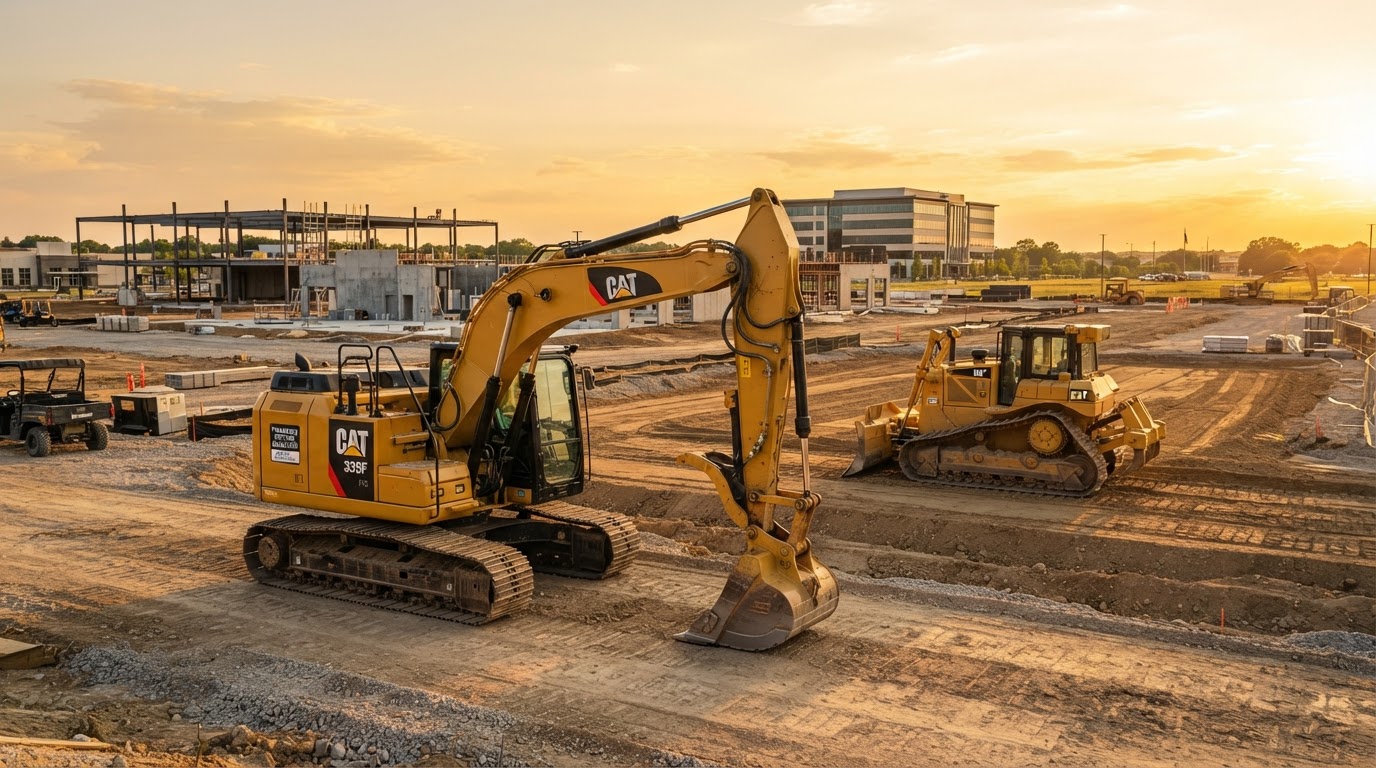
Most businesses need equipment to operate, but few have the cash on hand to buy it outright without disrupting everything else. Whether it is a construction company needing an excavator, a restaurant needing ovens, a medical practice needing diagnostic devices, or a trucking company needing a new rig, the cost of essential equipment can easily exceed available working capital. Equipment financing solves that problem by spreading the cost over time, letting you put the equipment to work immediately while keeping your cash reserves intact. In this guide, Ashley Boswell and Damon Boswell explain how equipment financing works, what it costs, and who it tends to fit best.
At ASAP Capital Solutions, we talk to owners every week who are weighing whether to buy equipment outright or finance it. Damon Boswell often explains that equipment financing is fundamentally different from a general business loan because the financing is tied directly to the asset being purchased. Ashley Boswell adds that this single feature, the equipment serving as collateral, shapes everything else about how the product works, what it costs, and who can qualify.
What Is Equipment Financing?
Equipment financing is a funding structure that allows a business to acquire equipment, new or used, by making fixed payments over a set term rather than paying the full cost upfront. The equipment itself typically serves as collateral for the financing, which means the lender can repossess the asset if payments stop. This collateral structure makes equipment financing easier to qualify for than an unsecured business loan, because the lender has a tangible asset backing the agreement.
Ashley Boswell explains that because the financing is tied to the asset, lenders can be more flexible with credit requirements. The equipment provides security, which reduces the lender's risk. Damon Boswell adds that this is why businesses with challenged credit or shorter operating history can often qualify for equipment financing even when they cannot qualify for a traditional unsecured loan.
What Equipment Can Be Financed?
A wide range of commercial equipment can be financed. Based on current market standards, common categories include construction machinery, medical and dental devices, restaurant and kitchen equipment, trucks and commercial vehicles, manufacturing and fabrication machinery, IT hardware and technology, office furniture and fixtures, and even business software in some cases.
Damon Boswell notes that both new and used equipment are typically eligible. Ashley Boswell adds that financing can often cover not just the equipment itself but associated costs such as shipping, installation, labor, and maintenance, which means there are no surprise expenses outside the fixed monthly payment.
Pro tip from Damon Boswell: When you finance equipment, ask whether shipping, installation, and training can be bundled into the financing. Rolling these costs into one fixed payment prevents unexpected cash outlays that can strain your working capital.
How Equipment Financing Works
The process generally begins with selecting the equipment and submitting a financing application. For smaller deals, often up to $250,000, many lenders offer application-only financing that requires no financial statements, just a simple application and credit review. For larger deals, typically above $250,000 to $500,000, the lender may request financial statements, tax returns, and additional documentation.
Ashley Boswell walks through the structure. If approved, the lender pays the equipment vendor directly, and the business takes possession of the equipment and begins making fixed payments over the agreed term. The term is usually aligned with the useful life of the equipment, which can range from a few months to several years. Damon Boswell adds that at the end of the term, the business typically owns the equipment outright, though some agreements offer a nominal buyout or a fair-market-value purchase option at the end.
Qualification Requirements
Because the equipment serves as collateral, qualification requirements are generally more flexible than traditional business loans. Based on current market standards, equipment financing lenders commonly evaluate time in business, monthly or annual revenue, personal credit score, down payment capability, and the type and cost of the equipment being financed.
Damon Boswell walks through the typical benchmarks. Most lenders prefer at least two years in business, though businesses with strong credit may qualify with a shorter operating history. Many lenders want to see at least $10,000 in monthly revenue, with some requiring minimum annual revenue of $100,000 to $250,000. Personal credit scores can be more flexible than with unsecured loans, because the equipment provides security. Ashley Boswell adds that down payments typically range from 5 to 20 percent of the equipment cost, and that a larger down payment can offset limitations in credit or time in business.
Key takeaway from Ashley Boswell: You do not need perfect credit to finance equipment. Because the equipment backs the financing, lenders take less risk than with unsecured loans. Even with scores below 600, a larger down payment can often secure approval when you show solid revenue.
What Equipment Financing Costs
Equipment financing typically uses a fixed interest rate rather than a factor rate, which makes the cost more predictable and easier to compare with other loan products. Based on current market standards, rates vary widely depending on the borrower's credit profile, time in business, the type and age of the equipment, and the lender. Businesses with strong credit and established history generally receive the most favorable rates, while newer businesses or those with challenged credit may face higher rates or larger down payment requirements.
Damon Boswell notes that because the equipment serves as collateral, the overall cost is often lower than a comparable unsecured loan or merchant cash advance. Ashley Boswell adds that owners should also ask about any origination fees, documentation fees, or end-of-term buyout costs, because the advertised rate is rarely the only cost. Seeing the total cost in dollars, including all fees, makes the real expense concrete.
The Section 179 Tax Advantage
One of the most compelling reasons to finance equipment rather than wait and pay cash is the potential tax benefit. Under IRS Section 179, businesses can deduct the full purchase price of qualifying equipment in the year it is purchased and placed in service, rather than depreciating it over several years. Based on current IRS guidelines, the deduction limit can be over $2 million, with a spending cap before the deduction begins to phase out.
Ashley Boswell explains that this means a business that finances equipment may be able to deduct the full purchase price in the same year, even though the cash is paid out over time through financing. Damon Boswell adds that this can create a significant tax advantage, because the business gets the deduction upfront while spreading the actual cash outlay across the financing term. Ashley Boswell stresses that business owners should always consult a tax professional to confirm how Section 179 applies to their specific situation, because tax rules and limits can change.
Pro tip from Damon Boswell: Financing equipment can let you claim the Section 179 deduction in the year of purchase while preserving your cash flow. Talk to your accountant before year-end to see how this could benefit your business.
Equipment Financing vs. Other Funding Options
Equipment financing is one of several funding paths, and understanding the differences matters. Damon Boswell compares the most common alternatives. A general business loan provides capital that can be used for any purpose, but it does not have the collateral advantage of equipment financing and may carry stricter qualification. A business line of credit offers revolving access to funds that can be drawn as needed, which may be more cost-effective for intermittent needs but typically offers lower amounts. A merchant cash advance provides fast capital with flexible qualification but significantly higher costs. Leasing is another option that differs from financing in that the business does not own the equipment at the end of the term, though lease payments may be fully deductible as an operating expense.
Ashley Boswell notes that the right choice depends on whether you want to own the equipment, how much you need, and what your qualifications allow. Damon Boswell adds that for businesses specifically acquiring equipment, equipment financing is often the most cost-effective and accessible path, because the asset itself secures the agreement.
When Equipment Financing Makes Sense
Equipment financing is most appropriate when a business needs a specific piece of equipment to operate or grow, wants to preserve working capital, and prefers the collateral advantage of asset-backed financing. This includes construction companies needing machinery, restaurants needing kitchen equipment, medical and dental practices needing diagnostic devices, trucking companies needing vehicles, manufacturers needing fabrication equipment, and professional firms needing technology upgrades.
Damon Boswell notes that the best use of equipment financing is one where the equipment generates revenue or reduces costs that justify the payment. If the new equipment increases capacity, reduces labor costs, or enables new services, the financing can pay for itself. Ashley Boswell adds that the worst use is financing equipment the business does not genuinely need, because the payment becomes an obligation without a corresponding return.
What to Review Before You Finance Equipment
Before moving forward, Ashley Boswell and Damon Boswell recommend reviewing the total equipment cost including shipping and installation, the interest rate and total repayment amount in dollars, the term length and payment schedule, any down payment required, any origination or documentation fees, the end-of-term ownership structure, and whether a personal guarantee is required. Ask whether the equipment qualifies for Section 179 treatment, and confirm the timeline from application to funding.
Damon Boswell is especially firm on one point: confirm the end-of-term structure before you sign. Some agreements transfer ownership automatically, others require a nominal buyout, and others use a fair-market-value purchase option that can add an unexpected cost at the end. Ashley Boswell adds that owners should also confirm whether the lender files a lien on the equipment, because that affects the business's ability to sell or refinance the asset later.
How to Decide If Equipment Financing Fits Your Business
Start by asking yourself a few honest questions. Do you need a specific piece of equipment to operate or grow? Would paying cash for it strain your working capital? Does your revenue support the fixed payment? Is your credit profile strong enough to qualify, or can you offset limitations with a larger down payment? If your answers point to a clear equipment need and a payment your business can service, equipment financing may be worth exploring.
Damon Boswell suggests owners compare the monthly payment against the revenue or savings the equipment will generate. If the equipment increases capacity or reduces costs enough to cover the payment, the financing makes sense. If the equipment is a luxury that does not generate a return, the payment becomes a burden. Ashley Boswell adds that the decision should always include a conversation with a tax professional about Section 179, because the tax benefit can significantly improve the economics of the purchase.
How This Connects to Your Funding Options
Equipment financing is one of several funding paths a business can explore through ASAP Capital Solutions. Others may include a business line of credit, a merchant cash advance, a small business loan, invoice factoring, a secured business loan, or a credit-based strategy like 0% credit card stacking for qualified applicants. None of these options are guaranteed, and all are subject to review, underwriting, documentation, credit profile, business revenue, and funding partner requirements. The right path depends on your revenue, your timeline, your credit profile, and how you plan to use the funds.
If you are not sure which option fits your business, the fastest place to start is the AI Funding Match Calculator. It takes under 60 seconds, and a funding specialist can review your profile and follow up by phone during your preferred call window. As Ashley Boswell and Damon Boswell always remind owners, the businesses that get the best results are the ones that understand their options, preserve their working capital strategically, and match the right funding tool to the right asset.