Applying for business funding can feel overwhelming, but the single most common reason applications get delayed is not a weak business. It is a missing, inconsistent, or outdated document. Lenders use the documents you provide to evaluate repayment ability, verify identity, assess business health, and determine how much risk the loan represents. In this guide, Damon Boswell and Ashley Boswell walk through the complete business loan application checklist, what each document tells a lender, and how to prepare a clean file that moves quickly through review.
At ASAP Capital Solutions, we talk to business owners every week who have strong businesses but disorganized files. Damon Boswell often explains that a complete, consistent file does not guarantee approval, but an incomplete file almost guarantees delay. Ashley Boswell adds that the businesses that get reviewed fastest are the ones that arrive organized, with documents that match each other and tell a coherent story.
Why Documentation Matters So Much
Lenders evaluate business loan applications using a framework often called the 5 C's of Credit: character, capacity, capital, collateral, and conditions. Damon Boswell explains that every document you submit speaks to one or more of these five factors. Your credit report speaks to character. Your bank statements and financials speak to capacity. Your personal investment speaks to capital. Your asset documentation speaks to collateral. And your explanation of how funds will be used speaks to conditions.
Ashley Boswell adds that lenders want consistency above all. If the business name on your bank statements does not match your formation documents, or the revenue figures on your application differ from your tax returns, underwriters will pause to resolve the discrepancy. Inconsistency is the single most common cause of review delays, and it is the easiest problem to prevent before you apply.
Pro tip from Damon Boswell: Before you submit anything, lay every document side by side and confirm the business name, address, ownership details, and revenue figures all match. A file that tells one consistent story moves through review far faster than a file full of small contradictions.
Business and Owner Information
The foundation of every application is basic business and owner information. Based on current market standards, lenders commonly request the legal business name as registered with the state, the business structure such as LLC, S-Corp, or sole proprietorship, the Employer Identification Number or EIN, the business address and contact details, the date the business was established, government-issued photo ID for all owners with a 20% or greater ownership stake, the ownership breakdown including names and equity percentages, and Social Security numbers for all owners with a 20% or greater stake for personal guarantee and credit review.
Damon Boswell notes that missing decision-maker details are a frequent cause of delay. If the business has multiple owners, all owners with 20% or more equity typically need to sign and provide their information. Ashley Boswell adds that lenders verify this information against public records, so it must match exactly. A business operating under a DBA should include the fictitious business name registration alongside the formation documents.
Bank Statements
Bank statements are often the single most important document in a business loan application, because they show the actual cash flow a lender is relying on for repayment. Online and alternative lenders typically start with three to six months of business bank statements, while bank and SBA lenders often request twelve months. Damon Boswell stresses that consistent, verifiable deposits are the foundation of every approval and the primary driver of the funding amount.
Ashley Boswell adds that lenders review bank statements for steady deposits, strong average balances, and limited negative days. A clean, predictable bank history strengthens your file more than almost anything else. She recommends pulling your statements and reviewing them the way a lender will before you apply, looking for any negative days you may need to explain. Statements should cover all active business accounts, not just the primary checking account, and the business name on the statements must match your application and formation documents.
Key takeaway from Ashley Boswell: Before you apply, pull three to six months of business bank statements and review them the way a lender will. Look for consistent deposits, manageable balances, and any negative days you may need to explain. A clean, predictable bank history can make the difference between approval and denial.
Financial Statements
Financial statements tell the lender whether your business is profitable and sustainable. Based on current market standards, lenders commonly request a profit and loss statement, both year-to-date and for the prior year, showing revenue, expenses, and net income. A balance sheet listing assets, liabilities, and equity at a point in time. An accounts receivable aging report for businesses with significant outstanding invoices. And an accounts payable schedule showing what the business currently owes and when it is due.
Damon Boswell notes that the balance sheet demonstrates to a lender how much your business owns against how much it currently owes. A higher debt load makes approval harder, but not impossible. Ashley Boswell adds that roughly 40% of small businesses carry $100,000 or more in debt and still qualify for financing, so existing debt is not disqualifying, but it factors into what your cash flow can support.
Tax Returns
Tax returns verify your income and give lenders a look at your debt-to-income ratio. Based on current market standards, lenders commonly request two years of business tax returns and two years of personal tax returns for all owners with 20% or more ownership, especially for SBA and bank loans. Damon Boswell notes that incomplete returns cause review delays, so owners should include all schedules and attachments, not just the main forms.
Ashley Boswell adds that some SBA lenders require IRS tax transcripts directly from the IRS using Form 4506-C, which verifies that the returns you submitted match what the IRS has on file. If your tax returns do not match your financial statements, the lender will pause to resolve the discrepancy. Consistency between your tax returns, your financial statements, and your bank statements is one of the strongest signals a file can send.
Credit Reports
Lenders review both personal and business credit. Your personal credit report helps them evaluate how you have managed debt and whether you have ever declared bankruptcy. Ashley Boswell notes that a credit score of 690 or higher is generally considered ideal for securing a business loan, though many alternative lenders work with lower scores. If your business has established credit, lenders may also review a business credit report from Dun and Bradstreet, Experian Business, or Equifax Business.
Damon Boswell recommends pulling your personal and business credit reports before you apply and addressing any errors. Inaccuracies and blemishes on your credit report can hurt your chances of approval, and it is far easier to correct them before you apply than to explain them mid-review. If you have negative items like late payments or collections, prepare a clear, honest explanation, because lenders may ask you to explain them.
Pro tip from Damon Boswell: Do not wait until you apply to look at your credit. Pull your reports, dispute any errors, and prepare explanations for any negative items. A clean, well-explained credit file is far stronger than one full of surprises.
Legal Documents
Legal documents verify that your business is properly formed and authorized to operate. Based on current market standards, lenders commonly request business formation documents like articles of incorporation or articles of organization, the operating agreement or bylaws, current business licenses and permits applicable to your industry and location, a fictitious business name or DBA registration if operating under a different name, any relevant franchise agreements for franchisees, commercial leases, and copies of contracts with third parties.
Ashley Boswell explains that these documents confirm the business is legitimate and properly structured. A lender wants to know that the entity they are lending to actually exists, is in good standing, and has the authority to borrow. Damon Boswell adds that missing or expired licenses and permits can delay a file, so owners should confirm all registrations are current before applying.
Collateral Documents
Not every loan requires collateral, but when it does, lenders need documentation of the assets being pledged. Based on current market standards, collateral documents may include a real estate appraisal or title documentation if pledging commercial or personal property, an equipment list with values if pledging equipment, an accounts receivable aging report if pledging receivables, and personal assets documentation if a personal guarantee includes personal property.
Damon Boswell notes that collateral requirements vary greatly. Some loan programs do not require collateral at all. Loans involving higher risk factors require substantial collateral. Ashley Boswell adds that strong business plans and financial statements can help you avoid putting up collateral, but it is always a good idea to prepare a collateral document describing the cost and value of any property you are willing to pledge.
A Clear Use of Funds Statement
One of the most overlooked parts of a strong application is a clear, specific explanation of how the funds will be used. Ashley Boswell notes that a vague explanation like general business purposes prompts more questions than a specific one. Name the actual use: upgrade refrigeration equipment, cover payroll for three months during slow season, purchase inventory for Q4, or acquire a competitor. A specific use of funds shows the lender you have thought through the request and have a plan for how the capital will generate the return to repay the loan.
Damon Boswell adds that the use of funds should align with the loan structure. Using short-term, high-cost funding for a long-term investment is a red flag for a lender. The structure of the funding should match the purpose, and your use of funds statement should make that alignment clear.
Common Issues That Delay Approval
Damon Boswell and Ashley Boswell see the same issues repeatedly. Inconsistent information, where the business name, revenue figures, or ownership details do not match across documents. Unclear funding requests, where the use of funds is vague. Missing decision-maker details, where not all owners with 20% or more equity have signed or provided information. Outdated documents, where bank statements or financials are more than a few months old. And incomplete tax returns missing schedules and attachments.
Ashley Boswell adds that the fix for almost every one of these issues is preparation. Lay your documents out before you apply, confirm consistency, fill in any gaps, and prepare explanations for anything a lender might question. Damon Boswell stresses that a clean, complete, consistent file does not guarantee approval, but it gives your business the best possible chance of being reviewed quickly and favorably.
Key takeaway from Damon Boswell: The businesses that get funded fastest are not always the strongest businesses. They are the most prepared ones. Organize your file, confirm consistency, and arrive with a complete picture. A lender can only review what you give them.
How to Prepare a Strong File Before You Apply
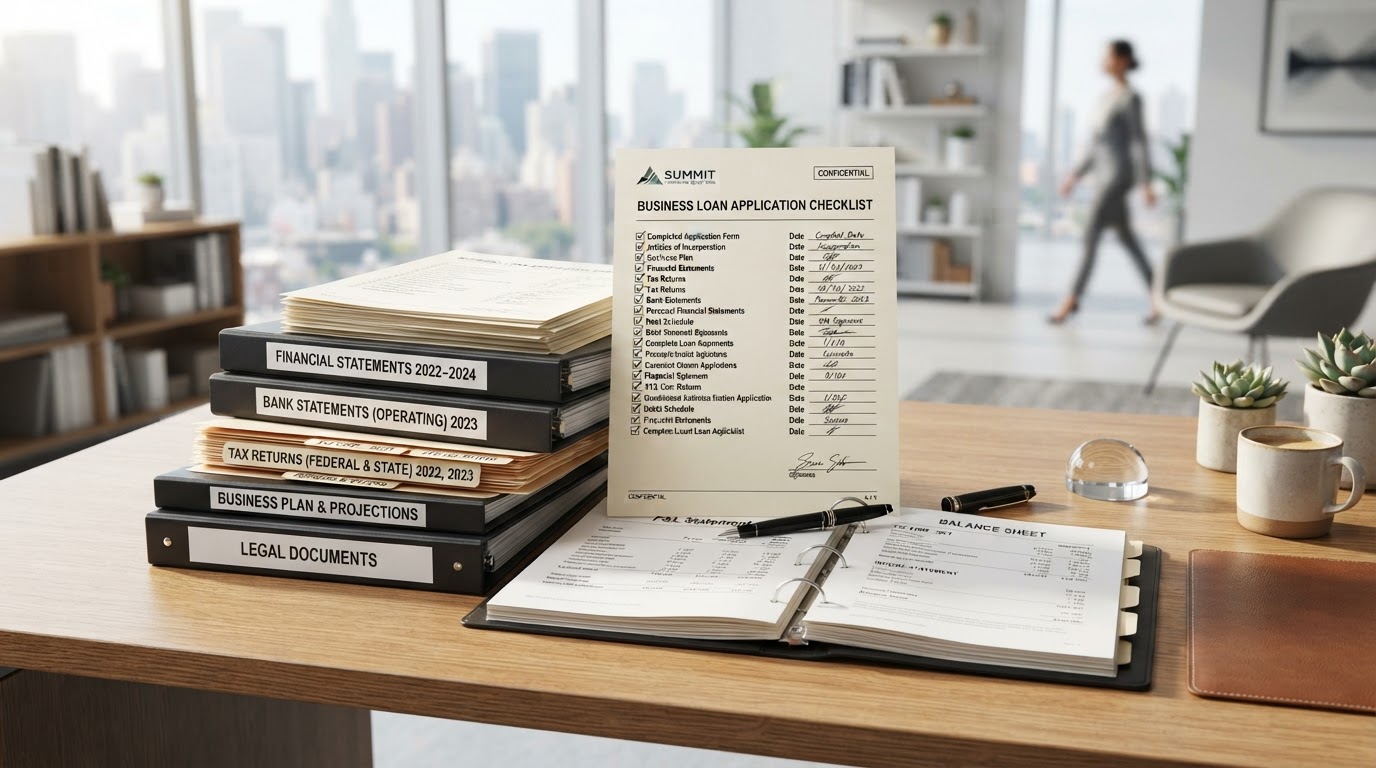
Before approaching lenders or funding partners, Damon Boswell and Ashley Boswell recommend the following. Pull your personal and business credit reports and address any errors. Gather three to six months of business bank statements and review them for consistency and any negative days. Prepare year-to-date and prior year profit and loss statements and a current balance sheet. Collect two years of business and personal tax returns with all schedules. Confirm your formation documents, licenses, and permits are current. Prepare a clear, specific use of funds statement. And document any collateral you may be able to pledge.
Damon Boswell is especially firm on one point: be honest and complete. Lenders uncover inconsistencies, and a file that does not match the business's actual financials can derail an otherwise strong request. Ashley Boswell adds that a clear, organized file strengthens your position, because it shows the lender that you understand your business and have thought through the request.
How This Connects to Your Funding Options
A strong application file is the foundation of every funding path a business can explore through ASAP Capital Solutions. Those paths may include a business line of credit, a merchant cash advance, a small business loan, a secured business loan, invoice factoring, equipment financing, or a credit-based strategy like 0% credit card stacking for qualified applicants. None of these options are guaranteed, and all are subject to review, underwriting, documentation, credit profile, business revenue, and funding partner requirements. The right path depends on your revenue, your timeline, your credit profile, your available collateral, and how you plan to use the funds.
If you are a business owner preparing to apply for funding, the fastest place to start is the AI Funding Match Calculator. It takes under 60 seconds, and a funding specialist can review your full profile and follow up by phone during your preferred call window. As Damon Boswell and Ashley Boswell always remind owners, the businesses that get funded are the ones that arrive organized, present a consistent story, and give the lender a complete picture from the very first submission.