
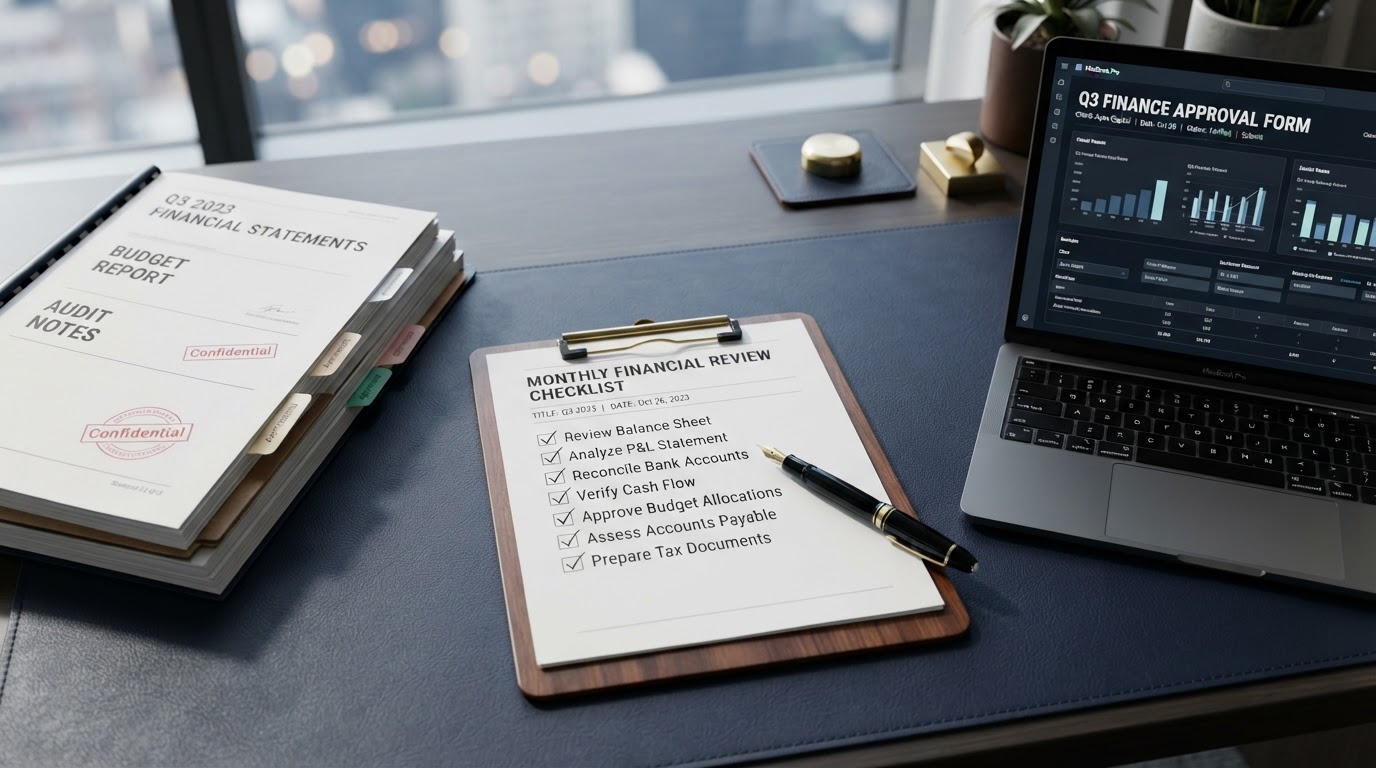
The difference between a smooth business loan application and a weeks-long back-and-forth often comes down to one thing: documentation. Lenders review a loan application by verifying that the business can repay the debt, that the financials are accurate and consistent, and that the risk profile fits their criteria. Every document they request serves that review. When the documents are organized and complete, the process moves efficiently. When they are missing, incomplete, or inconsistent, the application stalls or gets declined. In this guide, Damon Boswell and Ashley Boswell break down the complete document checklist for a small business loan application, why each document matters, and how to prepare your file before you apply so it has the best chance of being reviewed favorably.
At ASAP Capital Solutions, we talk to business owners every week who apply for funding and then scramble to gather documents after the fact. Damon Boswell often explains that the most common reason a loan application gets delayed is not credit or revenue. It is missing paperwork. Lenders cannot review what they cannot see, and an incomplete file pushes your application to the back of the queue while you gather what should have been ready from the start. Ashley Boswell adds that the businesses that get funded fastest are the ones that show up organized, with every document a lender might need already in hand.
Why Documentation Matters
Lenders use documentation to verify three things. First, that the business is legitimate and properly registered. Second, that the business generates enough revenue and cash flow to comfortably service the debt. Third, that the financials are accurate, consistent, and free of red flags. Damon Boswell notes that every document in a loan application serves one of these three purposes, and understanding that helps you prepare the right materials rather than scrambling when a lender asks for something unexpected.
Ashley Boswell adds that consistency is the detail most owners overlook. Lenders cross-reference documents, comparing bank statements to tax returns to profit and loss statements. If the numbers do not align, the lender may question the accuracy of the financials or request additional documentation to explain the discrepancy. A file where the numbers tell the same story across every document is a far stronger file than one where they conflict. Damon Boswell stresses that taking the time to reconcile your documents before you apply prevents the most common reason applications get delayed or declined.
Pro tip from Damon Boswell: Before you submit, lay out your bank statements, tax returns, and profit and loss statements side by side. Do the revenue numbers match? Do the dates align? If a lender can verify your story across documents, your file is strong. If the documents contradict each other, your file raises questions before anyone reviews the actual request.
Business Formation and Registration Documents
The first category of documents proves that your business is legitimate and properly structured. Damon Boswell walks through what lenders commonly request.
Articles of incorporation or articles of organization are the documents filed with your state when you formed your business entity. They prove that your business is legally registered as a corporation or an LLC. For partnerships or multi-member LLCs, an operating agreement shows the ownership structure and how the business is managed. Business licenses and permits demonstrate that your business is authorized to operate in its industry and location.
Ashley Boswell adds that your Employer Identification Number, or EIN, is essential because it is the federal tax identifier for your business. Lenders use it to verify your business identity and pull credit reports. If your business is a franchise, a franchise agreement may also be required to document the franchise relationship and terms. These documents establish the legal foundation that every other part of the application builds on.
Financial Documents
The second category proves that your business generates enough revenue and cash flow to repay the loan. This is where most of the review happens, and it is where preparation matters most. Damon Boswell walks through the financial documents lenders commonly request.
Business bank statements are typically the first financial document a lender requests. Most ask for three to six months of recent business bank statements, though some request up to a year. Ashley Boswell notes that lenders review bank statements for consistency of deposits, average daily balances, and any negative days or overdrafts. Steady, predictable deposits are one of the strongest signals a business can show a lender, because they demonstrate that revenue is real and recurring.
Personal and business tax returns, usually for the most recent two to three years, allow the lender to verify that the income on your financial statements matches what was reported to the IRS. Damon Boswell stresses that if your tax returns and your financial statements do not align, the lender will question the accuracy of your file. Consistency across these documents is one of the most important factors in a clean review.
A profit and loss statement, sometimes called an income statement, shows your business's revenue and expenses over a specific period and reveals whether the business is operating at a profit. Ashley Boswell adds that a balance sheet provides a snapshot of your business's assets, liabilities, and equity at a point in time, showing what the business owns versus what it owes. A cash flow statement breaks down how cash moves through the business across operating, investing, and financing activities, which helps the lender understand whether the business generates enough cash to service the debt.
Key takeaway from Ashley Boswell: Your financial documents must tell the same story. If your profit and loss statement shows one revenue figure, your bank deposits should support it, and your tax returns should confirm it. When the numbers align across documents, the lender's review is fast and confident. When they conflict, the review stalls.
Accounts Receivable and Payable Reports
For businesses that invoice customers, an accounts receivable aging report shows which invoices are outstanding, for how long, and from which customers. Damon Boswell explains that lenders use this report to assess the quality of your receivables, because if you are using invoice financing or factoring, the strength of your invoices is central to the approval.
Ashley Boswell adds that an accounts payable aging report shows what your business owes to its suppliers and vendors, which helps the lender understand your existing obligations and whether adding a new debt payment fits within your cash flow. A schedule of current business debts, listing each loan or advance with its balance, payment, and term, gives the lender a complete picture of your existing debt load.
Collateral and Asset Documentation
If you are applying for a secured loan, the lender will request documentation of the collateral. Damon Boswell notes that this may include equipment lists with serial numbers and values, real estate appraisals, vehicle titles, or inventory counts. The lender needs to confirm that the collateral exists, that it belongs to the business, and that its value supports the loan amount.
Ashley Boswell adds that for real estate collateral, the lender may request a recent appraisal or a title report. For equipment, they may ask for purchase orders or invoices showing what you paid. The goal is to establish a clear value for the asset so the lender can calculate the loan-to-value ratio and determine how much they are willing to lend against that collateral.
SBA Loan Documents
If you are applying for an SBA 7(a) loan, additional documents may be required beyond the standard business loan paperwork. Damon Boswell walks through the SBA-specific forms that are commonly requested. SBA Form 1919, the Borrower Information Form, collects basic borrower information. SBA Form 413, the Personal Financial Statement, details the personal assets, liabilities, and net worth of the business owners. SBA Form 912, the Statement of Personal History, may be required after Form 1919 is reviewed.
Ashley Boswell adds that SBA lenders also typically request current profit and loss statements with schedules from the prior three fiscal years, balance sheets for the last three years, one year of projected financial statements with a detailed explanation of how the business will meet those projections, a list of affiliates and subsidiaries with their names and addresses, a written statement of the company's history and the reason for requesting funding, a list of other business loans applied for, and proof of equity if the loan is for a business acquisition.
Pro tip from Damon Boswell: SBA loans require more documentation than conventional loans, which is part of why they take longer to close. If you are pursuing an SBA option, start gathering these documents early. The timeline is often driven by how quickly you can provide a complete file, not by how fast the lender can review one.
Personal Documents
Most business loan applications also require personal documents from the business owner, especially for smaller businesses where a personal guarantee is common. Damon Boswell notes that lenders commonly request a personal identification such as a driver's license, a personal credit report which they typically pull directly, and a personal financial statement showing the owner's assets, liabilities, income, and net worth.
Ashley Boswell adds that for businesses with multiple owners, the lender may request personal documents from each owner with a significant ownership stake, because each may be asked to provide a personal guarantee. Understanding this in advance prevents surprises during the application process.
How to Prepare Your File Before You Apply
Damon Boswell and Ashley Boswell recommend gathering the following before you start an application. Pull three to six months of business bank statements and review them the way a lender will. Prepare or update your profit and loss statement and balance sheet. Gather your most recent two to three years of personal and business tax returns. Compile a current debt schedule listing all existing business loans and advances. Prepare a short, clear statement of how the loan proceeds will be used and how the business will generate the revenue to repay. Gather any collateral documentation if the loan will be secured. And collect all business formation documents, including your EIN letter and any licenses.
Damon Boswell stresses that the most important step is to review your documents for consistency before you submit. If your bank deposits, your profit and loss revenue, and your tax return income all align, the lender's review is fast and confident. If they conflict, the review stalls while you explain or gather more documentation. Ashley Boswell adds that a complete, consistent file does not guarantee approval, but it removes the most common obstacle that delays or derails applications that otherwise would have been approved.
Key takeaway from Ashley Boswell: A prepared business owner walks into an application with every document organized and consistent. An unprepared one scrambles after the fact and spends weeks answering follow-up requests that a complete file would have prevented. The difference is not the business. It is the preparation.
How This Connects to Your Funding Options
Understanding what documents a lender needs is the first step toward a successful funding application. The funding paths a business can explore through ASAP Capital Solutions may include a business line of credit, a merchant cash advance, a small business loan, a secured business loan, invoice factoring, equipment financing, or a credit-based strategy like 0% credit card stacking for qualified applicants. Each product may have slightly different documentation requirements, but all are subject to review, underwriting, documentation, credit profile, business revenue, and funding partner requirements. The right path depends on your revenue, your timeline, your credit profile, and the documents you can provide.
If you want to understand what funding options your documents may support, the fastest place to start is the AI Funding Match Calculator. It takes under 60 seconds, and a funding specialist can review your full profile and follow up by phone during your preferred call window. As Damon Boswell and Ashley Boswell always remind owners, the businesses that get funded are the ones that arrive organized, present a consistent story across every document, and never let missing paperwork turn a strong application into a delayed one.