
Restaurants operate on some of the thinnest margins and most unpredictable cash flow of any business. A strong Saturday can be followed by a slow Tuesday, and a walk-in cooler failure cannot wait 30 days for a bank decision. That combination of high transaction volume, tight margins, and time-sensitive needs makes restaurant financing genuinely different from funding other types of businesses. In this guide, Ashley Boswell and Damon Boswell break down how restaurant financing works, the funding options owners can explore, what lenders actually review, and how to match the right product to the right need.
At ASAP Capital Solutions, we talk to restaurant owners every week who need capital in days, not months. Damon Boswell often explains that the right financing is rarely one-size-fits-all. The same restaurant that needs fast working capital to bridge a slow January might need a longer-term loan to buy the building it operates in two years later. Ashley Boswell adds that matching the product to the need is the single most important decision a restaurant owner makes when borrowing, because using the wrong structure at the wrong time is how a manageable cost becomes a cash flow trap.
Why Restaurant Financing Is Different
Restaurants are treated as a distinct category by many funders because the business model carries its own patterns. High daily transaction volume, thin margins, meaningful seasonality, and significant upfront equipment costs all shape how a restaurant is evaluated. Damon Boswell notes that these patterns mean some funding options are simply better suited to restaurants than others. A lender that understands food service knows that a slow month does not mean a failing business, and that a broken oven is an emergency, not a preference.
Ashley Boswell adds that restaurant cash flow moves at a different pace than most industries. Food costs, payroll, rent, equipment, and seasonality all move at once, and when an opportunity or an equipment failure arrives, a 30 to 60 day bank timeline does not match the pace of the business. This is why restaurant owners often look to faster, revenue-based options for immediate needs and reserve longer-term loans for planned investments.
Restaurant Equipment Financing
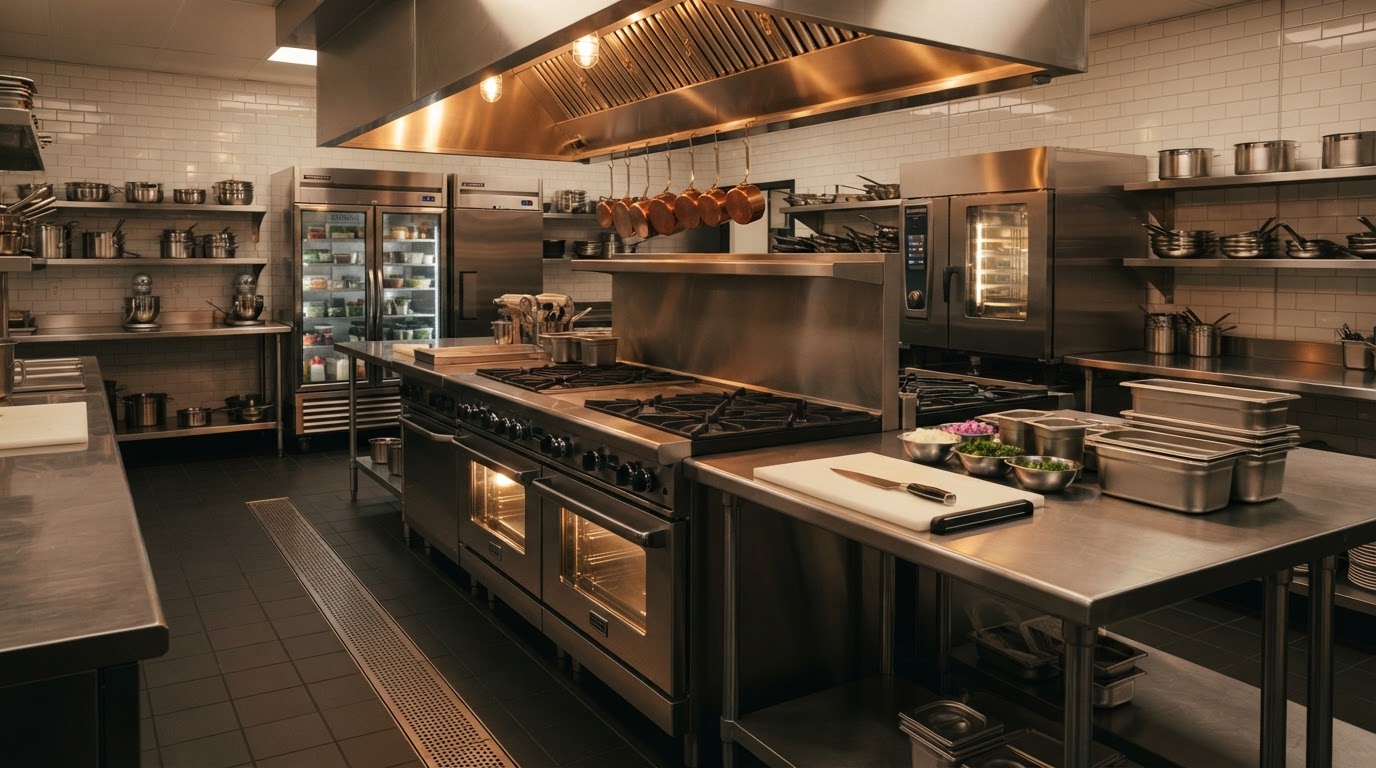
Restaurant equipment financing is used to purchase or lease the physical assets your kitchen runs on, including ovens, ranges, walk-in coolers, dishwashers, POS systems, and furniture. The equipment itself typically serves as collateral, which can make this one of the more accessible forms of restaurant funding because the asset holds value and reduces the lender's risk.
Ashley Boswell explains that financing equipment lets a restaurant spread the cost over time while the equipment earns its keep. Instead of paying tens of thousands of dollars upfront for a new refrigeration unit, the business makes fixed payments and keeps its cash available for operations. Damon Boswell adds that equipment financing is often the most accessible loan type for restaurants because the equipment secures itself, and it can be available to owners with credit scores starting around 600, since the asset provides built-in collateral. Equipment financing funds go directly to the vendor of your choice, with approvals often within 24 to 48 hours.
Pro tip from Damon Boswell: Match the financing term to the useful life of the equipment. A walk-in cooler that lasts 10 years can support a longer term, but a POS system replaced every 3 years should be financed over a shorter window so you are not still paying for technology you no longer use.
Working Capital and Merchant Cash Advances
Not every restaurant need is a piece of equipment. Sometimes you need cash to cover payroll, buy inventory ahead of a busy season, handle an unexpected repair, or smooth out cash flow between strong and slow weeks. Working capital funding, including merchant cash advances, is built around a restaurant's daily or weekly sales volume. Because restaurants process a high number of card transactions, this type of funding can be structured around that revenue stream and often moves faster than traditional options.
Damon Boswell notes that working capital and merchant cash advances are generally the fastest funding options for restaurants, with approvals often the same day and funding within 24 to 48 hours. The trade-off, Ashley Boswell adds, is that faster, more flexible funding generally costs more than slower, collateral-backed options. It is a tool for the right moment, not a permanent substitute for cheaper capital. Damon Boswell recommends using this funding for defined, short-term needs where the return is clear, such as covering payroll during a seasonal dip or stocking inventory before a peak stretch.
Business Lines of Credit for Restaurants
A business line of credit offers flexible, revolving access to working capital. Unlike a term loan funded all at once, revolving credit lets a restaurant draw what it needs and generally pay financing costs only on the outstanding balance. A line of credit can support purchasing inventory, payroll timing, repairs, vendor discounts, or seasonal dips, and as you repay what you have drawn, that portion of your limit becomes available again.
Ashley Boswell often tells owners that a line of credit is built for recurring, variable cash flow needs. If your restaurant has predictable seasonal swings or recurring short-term gaps, a line of credit lets you draw, repay, and draw again without reapplying each time. Damon Boswell adds that restaurants with at least one year in business, consistent revenue, and reasonable credit can typically qualify, and that a line of credit keeps a safety net available without paying for capital you do not need yet.
SBA Loans for Restaurants
The SBA 7(a) loan program can support working capital, equipment, furniture, real estate, refinancing, and business acquisitions, with a maximum loan amount of $5 million. SBA 504 financing is designed for major fixed assets such as owner-occupied real estate and long-life equipment. For smaller startup costs, SBA microloans provide up to $50,000 through approved intermediaries.
Ashley Boswell notes that SBA loans generally require a credit score of 680 or above, traditional bank loans start around 650, and alternative lenders may approve borrowers starting around 550 to 600. Damon Boswell stresses that SBA loans may support long-term financing, but they are not a bad-credit shortcut. Applicants must be creditworthy and able to repay. SBA loans generally take 60 to 90 days, so they suit long-term projects rather than immediate needs. If your need is urgent, an alternative option may get you funded far faster.
Key takeaway from Ashley Boswell: SBA loans offer some of the lowest-cost, longest-term financing available to restaurants, but they take time. If you are planning a renovation three months out, you have time to pursue an SBA option. If a cooler just failed, speed matters more than the lowest rate.
What Funders Look at When Evaluating Restaurants
When evaluating a restaurant, funders focus on a consistent set of signals. Based on current market standards, reviewers commonly look at monthly revenue and the consistency of bank deposits, time in business, personal credit profile, existing obligations, and bank statement health. Expect to provide about four months of business bank statements. Steady deposits, strong average balances, and limited negative days all work in your favor.
Damon Boswell stresses that consistent, verifiable deposits are the foundation of every approval and the primary driver of the funding amount. A minimum credit score of 600 applies for many programs, with stronger credit unlocking additional options. Ashley Boswell adds that existing financing is not disqualifying, but total obligations relative to revenue factor into what your cash flow can support.
Pro tip from Damon Boswell: Before you apply, pull four months of business bank statements and review them the way a funder will. Lenders want to see steady deposits and a healthy average balance. If your statements show consistent revenue, even with normal seasonality, your file is far stronger than you may realize.
How to Choose the Right Restaurant Funding Option
With several paths available, the right choice comes down to matching the funding to the need. Damon Boswell and Ashley Boswell walk through how to decide. How fast do you need the money? If a cooler died and you are losing product every hour, speed outweighs cost, and working capital or a merchant cash advance may fit. If you are planning a renovation months out, you have time to pursue lower-cost options like an SBA loan.
Is it an asset or an operating need? Equipment purchases fit equipment financing. Payroll, inventory, and cash-flow gaps fit working capital or a line of credit. What is your track record? Established restaurants with strong financials have access to the full menu of options, while newer restaurants lean more on equipment financing and personal capital. How predictable is the need? A one-time, defined expense fits a term loan. A recurring, seasonal need fits a line of credit you can draw on repeatedly.
Ashley Boswell notes that there is rarely a single best option. There is the best fit for your specific situation. Damon Boswell adds that the goal is to match the structure to the purpose, using short-term flexible capital for operating needs and longer fixed terms for equipment and one-time projects.
How This Connects to Your Funding Options
Restaurant financing is one of several funding paths a business can explore through ASAP Capital Solutions. Others may include a business line of credit, a merchant cash advance, a small business loan, a secured business loan, invoice factoring, or a credit-based strategy like 0% credit card stacking for qualified applicants. None of these options are guaranteed, and all are subject to review, underwriting, documentation, credit profile, business revenue, and funding partner requirements. The right path depends on your revenue, your timeline, your credit profile, and how you plan to use the funds.
If you are a restaurant owner wondering what funding options may fit your business, the fastest place to start is the AI Funding Match Calculator. It takes under 60 seconds, and a funding specialist can review your profile and follow up by phone during your preferred call window. As Ashley Boswell and Damon Boswell always remind restaurant owners, the restaurants that thrive are the ones that match the right funding tool to the right need, plan for their seasonal swings, and never let a short-term cash flow gap become a long-term problem.