
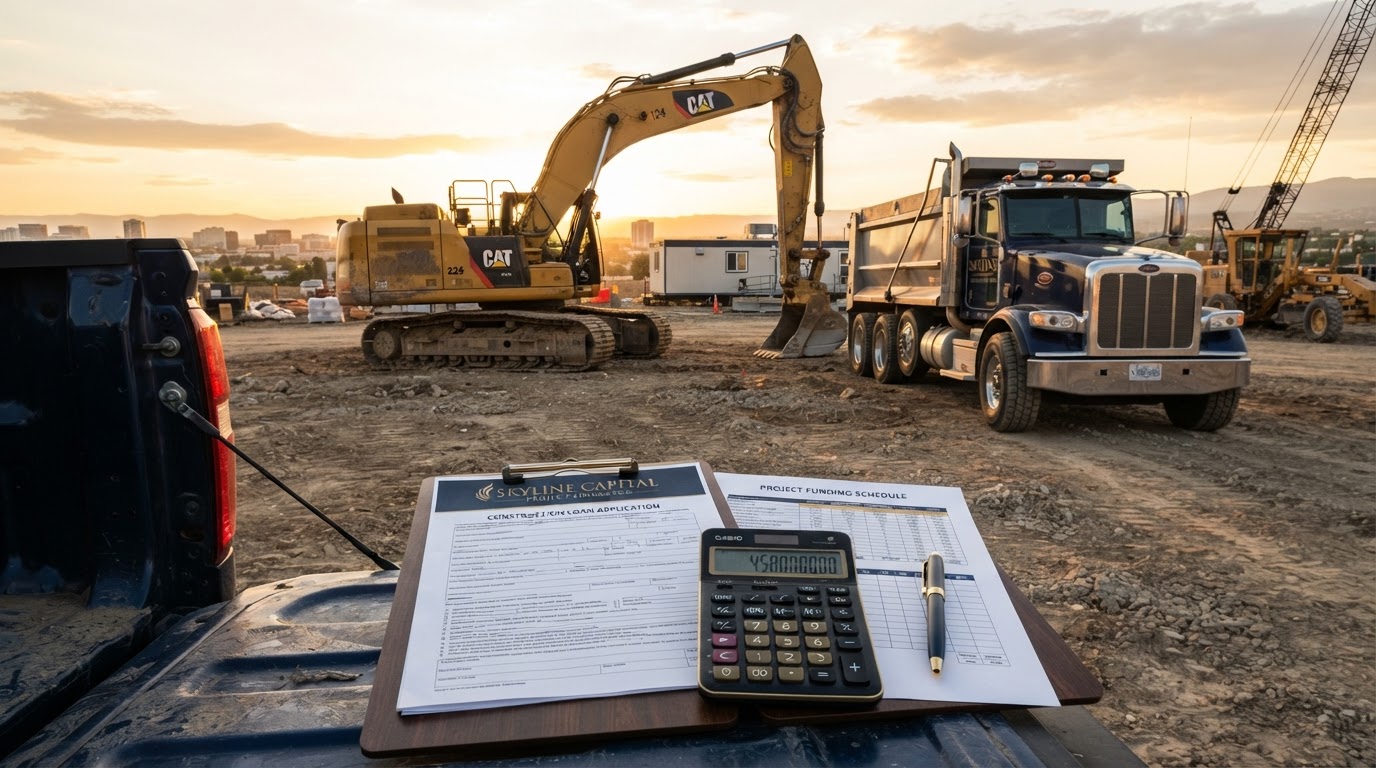
If your business owns equipment, a truck, a tractor, a kitchen full of ovens, a shop full of CNC machines, or a fleet of vehicles, that equipment is more than a tool. It is an asset, and under the right conditions, it is an asset you can borrow against. Equipment refinancing is the process of replacing an existing equipment loan with a new one, either to lower the monthly payment, extend the term, reset a balloon, or pull cash out of the equity you have built in the equipment. In this guide, Damon Boswell and Ashley Boswell break down how equipment refinancing works, when it makes sense, how a cash-out refinance differs from a rate-and-term refinance, and how to decide whether it fits your business.
At ASAP Capital Solutions, we talk to contractors, trucking companies, manufacturers, and restaurateurs every week who have equipment loans that no longer fit their cash flow. Damon Boswell often explains that equipment refinancing is not just about a lower rate. It is about restructuring a payment so your business can breathe. Ashley Boswell adds that the businesses that benefit most are the ones that refinance before the old payment becomes a crisis, not after.
What Is Equipment Refinancing?
Equipment refinancing replaces your existing equipment loan with a new loan, typically secured by the same piece of equipment. According to lending industry guidance, refinancing can reduce your monthly payment, help you avoid a looming balloon payment, let you exercise a purchase option at the end of a lease, free up cash through a cash-out refinance, or consolidate multiple equipment loans into a single payment.
Damon Boswell explains that there are two main flavors of equipment refinance. A rate-and-term refinance replaces the old loan with a new one at a lower rate or a longer term, purely to reduce the payment. A cash-out refinance does the same thing but also lets you borrow more than the remaining balance, tapping the equity you have built in the equipment and giving you the difference in cash. Ashley Boswell adds that the equity exists because equipment, especially heavy equipment and vehicles, often holds value longer than the original loan amortizes, which is what makes a cash-out refinance possible in the first place.
Pro tip from Damon Boswell: Before you refinance, find out the current market value of your equipment, not just the loan payoff. The gap between what you owe and what the equipment is worth is your equity, and that equity is what a cash-out refinance lets you access.
How a Rate-and-Term Refinance Works
A rate-and-term refinance is the simplest version. You have an existing equipment loan with a remaining balance, a rate, and a term. A new lender pays off that loan and issues you a new loan, ideally at a lower rate or a longer term, which lowers your monthly payment. The equipment still secures the new loan, and you keep using it exactly as before.
Damon Boswell notes that the most common trigger for a rate-and-term refinance is a change in market rates or a change in your business's cash flow. If rates have dropped since you took the original loan, or if your business hit a rough patch and the old payment has become a strain, refinancing into a longer term can bring the payment down to a manageable level. Ashley Boswell adds that another common trigger is an approaching balloon. If your original loan has a balloon payment at the end, refinancing before it arrives lets you spread that lump across the new term instead of scrambling to cover it all at once.
How a Cash-Out Refinance Works
A cash-out refinance goes a step further. Instead of just matching the remaining balance, the new lender loans you an amount above the payoff, secured by the equity in the equipment, and hands you the difference in cash. According to lending guidance, the mechanic mirrors a cash-out refinance on real estate: you replace the old loan with a larger one, use part of it to retire the old balance, and keep the remainder as working capital.
Ashley Boswell explains that this is one of the most overlooked sources of working capital for equipment-heavy businesses. A contractor whose truck is worth $60,000 but only has $20,000 left on the loan may be able to refinance into a $40,000 loan, pay off the $20,000 balance, and walk away with roughly $20,000 in cash, less closing costs, to reinvest in the business. Damon Boswell adds that the new loan is still secured by the equipment, so the rate is typically far lower than an unsecured working capital loan or a merchant cash advance.
Key takeaway from Ashley Boswell: A cash-out refinance turns equipment you already own into a source of cheaper working capital. Because the asset secures the loan, the rate is usually a fraction of what an unsecured alternative would charge, and you keep using the equipment while you repay.
What Lenders and Funding Partners Review
Even though the equipment secures the loan, the lender still evaluates a consistent set of factors. Based on current market standards, lenders commonly look at the current market value of the equipment, the remaining balance on the existing loan, the business's monthly revenue and bank statement health, the owner's personal credit profile, time in business, existing obligations, and the intended use of any cash-out proceeds.
Damon Boswell stresses that the equipment's value is the centerpiece of the review for a cash-out refinance. A lender will typically use a valuation guide or an appraisal to determine what the asset is worth, then calculate a loan-to-value ratio. If the equipment is worth $100,000 and the lender will go to 80% loan-to-value, the maximum new loan is $80,000, regardless of what you owe. Ashley Boswell adds that the lender also wants to see that the business can comfortably cover the new payment, so consistent bank deposits matter here just as they do on any other business loan.
Pro tip from Damon Boswell: Keep maintenance records and a clean title on any equipment you might refinance. A lender valuing the asset will want to see that it is in good working order, and a clear title with no other liens makes a cash-out refinance far easier to close.
When Equipment Refinancing Makes Sense
Equipment refinancing is the right move in specific situations. Damon Boswell and Ashley Boswell identify the scenarios where it typically wins. When market rates have dropped since the original loan, making a lower-rate refinance possible. When a balloon payment is approaching and spreading it across a new term eases the pressure. When the business's cash flow has tightened and the old payment has become a strain, so extending the term brings relief. When the equipment has held its value and a cash-out refinance can unlock working capital at a lower cost than unsecured options. And when multiple equipment loans are scattered across different lenders and consolidating them into one payment simplifies cash management.
Ashley Boswell adds that the cash-out scenario is especially powerful for equipment-heavy businesses that need working capital but do not want to pay the rates an unsecured loan or a merchant cash advance would charge. Because the equipment secures the new loan, the rate is typically a fraction of the alternative, and the business keeps using the asset the whole time. Damon Boswell notes that this is often the lowest-cost path to working capital for a business that has already invested in hard assets.
Key takeaway from Ashley Boswell: Match the refinance to the goal. If the goal is a lower payment, a rate-and-term refinance fits. If the goal is cash, a cash-out refinance fits. If the goal is simplifying, a consolidation fits. Knowing what you are trying to achieve is what determines which structure to use.
When Equipment Refinancing May Not Fit
Equipment refinancing is not always the right move. Damon Boswell is direct about the scenarios where it can backfire. If the equipment has depreciated below the remaining loan balance, there is no equity to cash out, and a refinance may not be possible without bringing cash to closing. If the original loan carries a prepayment penalty, the cost of breaking it may erase the savings from a lower rate. If the new term extends the debt far beyond the useful life of the equipment, the business could end up paying for a machine it has already replaced. And if the business's revenue has dropped sharply, the lender may not approve a new loan regardless of the equipment's value.
Ashley Boswell adds that the biggest mistake owners make is refinancing solely for a lower payment without reading the total cost. A longer term lowers the monthly payment but increases the total interest paid over the life of the loan. Damon Boswell stresses that the math has to work both ways: a lower payment that costs far more in total interest is not always a win, especially if the business plans to replace the equipment before the new term ends.
Pro tip from Damon Boswell: Run the total cost of the refinance, not just the new monthly payment. If a lower payment extends the debt years past the equipment's useful life, the short-term relief may cost more than it saves. Refinance for the right reason, not just for a smaller number on the statement.
How to Decide If Equipment Refinancing Fits Your Business
Start by gathering the facts. What is the remaining balance on your current equipment loan? What is the current market value of the equipment? What rate and term are you paying now, and what could you qualify for today? Is there a balloon approaching, and if so, when? Do you need a lower payment, or do you need cash? Damon Boswell and Ashley Boswell walk through the decision framework.
If your equipment has equity, your business has consistent revenue, and your goal is either a lower payment or working capital at a lower cost, a refinance may be a strong fit. If the equipment is underwater on its loan, the original loan has a prepayment penalty, or the new term would outlast the asset, it may not be. Damon Boswell stresses that the decision should always include the total cost, not just the monthly payment. Ashley Boswell adds that for an equipment-heavy business, a cash-out refinance is often worth exploring before turning to higher-cost unsecured options, because the asset-backed rate can be dramatically lower.
How This Connects to Your Funding Options
Equipment refinancing is one of several funding paths a business can explore through ASAP Capital Solutions. Others may include a business line of credit, a merchant cash advance, a small business loan, a secured business loan, an SBA loan, invoice factoring, new equipment financing, or a credit-based strategy like 0% credit card stacking for qualified applicants. None of these options are guaranteed, and all are subject to review, underwriting, documentation, credit profile, business revenue, and funding partner requirements. The right path depends on your revenue, your timeline, your credit profile, the value of your equipment, and how you plan to use the funds.
If you are a business owner wondering whether an equipment refinance may fit your situation, the fastest place to start is the AI Funding Match Calculator. It takes under 60 seconds, and a funding specialist can review your full profile and follow up by phone during your preferred call window. As Damon Boswell and Ashley Boswell always remind owners, the businesses that use their assets wisely are the ones that understand the equity they have already built, refinance it at the right moment for the right reason, and never let a lower payment blind them to the total cost of the loan.