Most businesses need equipment to operate, but few have the cash on hand to buy it outright without disrupting everything else. Whether it is a construction company needing a new excavator, a medical practice upgrading diagnostic equipment, a restaurant replacing a failing oven, or a trucking business adding to its fleet, the challenge is the same: how do you acquire the equipment you need without draining your working capital? In this guide, Ashley Boswell and Damon Boswell explain how equipment financing works, what types of equipment can be financed, and what every owner should review before signing.
At ASAP Capital Solutions, we work with owners across many industries who need to acquire equipment but do not want to tie up their cash reserves. Damon Boswell often explains that equipment financing is one of the most practical funding tools available because the asset being purchased typically serves as its own collateral. Ashley Boswell adds that this structure can make equipment financing more accessible than unsecured loans, especially for businesses that may not qualify for traditional bank financing.
What Is Equipment Financing?
Equipment financing is a funding structure that allows a business to acquire equipment, new or used, by making fixed payments over a set term rather than paying the full cost upfront. The equipment itself typically serves as collateral for the financing, which means the lender has a claim on the specific asset being purchased. This collateral structure is what makes equipment financing distinct from a general business loan, where the funds are not tied to a specific asset.
Ashley Boswell explains that because the equipment secures the financing, lenders can often be more flexible with credit and revenue requirements. The asset provides a fallback for the lender if the business defaults, which reduces their risk. Damon Boswell adds that this is why equipment financing can be available to businesses that might not qualify for an unsecured term loan of the same size.
What Equipment Can Be Financed?
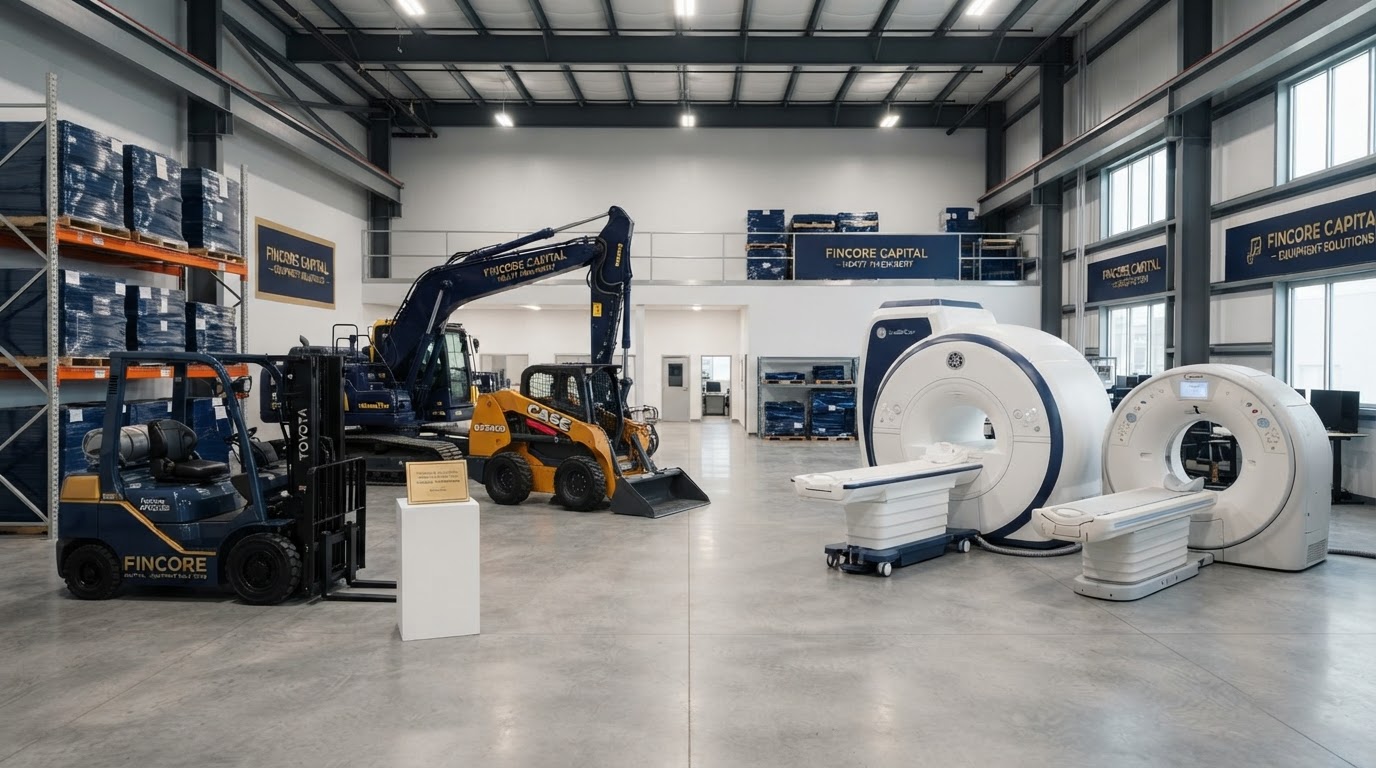
A wide range of commercial equipment can be financed. Based on current market practices, commonly financed assets include construction machinery such as excavators, loaders, and bulldozers; medical and dental equipment such as imaging machines, dental chairs, and diagnostic devices; restaurant equipment such as ovens, refrigerators, and point-of-sale systems; trucks, trailers, and fleet vehicles; manufacturing and production machinery; IT hardware and technology infrastructure; and even business software in some cases.
Damon Boswell notes that lenders generally prefer assets with a clear resale value, such as titled vehicles and standard machinery, because those assets are easier to recover and resell if the business defaults. Ashley Boswell adds that both new and used equipment can often be financed, and financing can sometimes cover not just the equipment itself but also associated costs like shipping, installation, and warranties.
How Equipment Financing Works
The process generally begins with an application in which the business provides basic information about itself, the equipment being purchased, and a vendor quote or invoice for that specific equipment. The lender reviews the business's credit profile, revenue, time in business, and the value and condition of the equipment. If approved, the financing is structured as fixed payments over a set term, often matching the expected useful life of the equipment.
Ashley Boswell stresses that the repayment term is typically tied to how long the equipment will remain useful. A piece of heavy machinery expected to last 7 years might be financed over a 5-year term, while a computer expected to be replaced in 3 years might be financed over a shorter period. Damon Boswell adds that matching the term to the useful life of the asset is important, because you do not want to still be paying for equipment that is no longer productive.
Pro tip from Damon Boswell: Match the financing term to the useful life of the equipment. If you finance a truck over 7 years but replace it every 5, you will still be paying for a vehicle you no longer use.
Equipment Loans vs. Equipment Leases
There are two main structures within equipment financing: loans and leases. With an equipment loan, the business owns the equipment and repays the loan over time, with the equipment serving as collateral. With an equipment lease, the lender owns the equipment and the business pays for the right to use it over a set period, often with an option to purchase the equipment at the end of the lease term.
Ashley Boswell explains that the right choice depends on whether you want to own the asset and how often you expect to upgrade. If the equipment is something you plan to keep for years, a loan may make more sense. If the equipment needs regular upgrades, such as technology that becomes obsolete quickly, a lease may offer more flexibility. Damon Boswell adds that leases often do not require a down payment, while loans may require one depending on credit and the asset type.
Who Equipment Financing Tends To Fit Best
Equipment financing is most useful for businesses that need a specific piece of equipment to operate or grow. This includes construction companies acquiring heavy machinery, medical and dental practices purchasing diagnostic or treatment equipment, restaurants replacing or upgrading kitchen equipment, trucking and transportation businesses adding vehicles to their fleet, manufacturing firms investing in production lines, and professional service firms upgrading technology or office infrastructure.
Damon Boswell notes that equipment financing can also be a fit for newer businesses, because the collateral structure can offset a shorter operating history. Ashley Boswell adds that some equipment lenders work with businesses that have as little as 6 to 12 months in business, especially when the owner has strong personal credit and the equipment has clear resale value.
Typical Qualification Requirements
While every lender sets its own standards, equipment financing commonly requires a personal credit score starting around 600 for many online lenders, with better terms often available at 650 or higher. Time in business is another factor, with many lenders looking for at least 1 year, though some work with newer businesses. Monthly revenue also plays a role, with many lenders looking for around $15,000 or more in monthly business revenue. A vendor quote or invoice for the specific equipment is typically required, and a down payment of 0 to 20 percent may be needed depending on credit and asset type.
Ashley Boswell stresses that because the equipment serves as collateral, the qualification requirements are often more flexible than unsecured funding. Damon Boswell adds that for application-only financing, many lenders do not require financial statements for amounts under a certain threshold, often around $75,000 to $250,000, which can speed up the process significantly.
Key takeaway from Ashley Boswell: Equipment financing is often more accessible than unsecured loans because the asset secures itself. But that does not mean approval is guaranteed. Credit, revenue, and the value of the equipment all still matter.
Common Use Cases for Equipment Financing
Business owners use equipment financing for a wide range of needs. Common uses include purchasing new or used machinery, replacing failing or outdated equipment, adding vehicles to a fleet, upgrading medical or dental technology, outfitting a new restaurant kitchen, investing in manufacturing or production equipment, and upgrading IT infrastructure or business software. Ashley Boswell notes that because the financing is tied to a specific asset, it is best used when there is a clear, identified piece of equipment the business needs.
Damon Boswell adds that equipment financing can also help businesses preserve working capital. Instead of spending $80,000 in cash on a piece of machinery, the business can finance it over several years and keep that cash available for payroll, inventory, marketing, or unexpected expenses. The equipment pays for itself over time through the revenue it helps generate.
What to Review Before You Sign
Before moving forward with equipment financing, Ashley Boswell and Damon Boswell recommend reviewing the total cost of the financing over its full term, not just the monthly payment. Ask about the interest rate or factor rate, any origination or documentation fees, whether a down payment is required, the repayment term and how it compares to the useful life of the equipment, whether there are prepayment penalties, and what happens at the end of the term, especially with leases. Confirm whether you will own the equipment outright or whether there is a buyout option.
Damon Boswell is especially firm on one point: understand whether you are entering a loan or a lease, and what that means for ownership. With a loan, you own the equipment and build equity over time. With a lease, the lender owns it, and you may need to pay a buyout to keep it at the end. Ashley Boswell adds that owners should also confirm what happens if the equipment breaks down during the term, because maintenance responsibilities differ between loans and leases.
How to Decide If Equipment Financing Fits Your Business
Start by identifying the specific equipment you need and why. Is it essential to your operations? Will it increase revenue, reduce costs, or allow you to take on more work? Can your business comfortably handle the monthly payment? Is the equipment expected to remain useful for at least the length of the financing term? If your answers point to a clear, productive asset that will generate value over time, equipment financing may be worth exploring.
Damon Boswell suggests owners compare the cost of financing against the cost of paying cash. If financing lets you preserve working capital for other needs while the equipment generates revenue, the cost may be justified. If the equipment will not produce enough value to cover its own financing cost, it may not be the right investment. Ashley Boswell adds that the decision should always include a realistic assessment of whether the business can handle the payment alongside its other obligations.
How This Connects to Your Funding Options
Equipment financing is one of several funding paths a business can explore through ASAP Capital Solutions. Others may include a business line of credit, a merchant cash advance, a small business loan, invoice factoring, a secured business loan, or a credit-based strategy like 0% credit card stacking for qualified applicants. None of these options are guaranteed, and all are subject to review, underwriting, documentation, credit profile, business revenue, and funding partner requirements. The right path depends on your revenue, your timeline, your credit profile, and how you plan to use the funds.
If you are not sure which option fits your business, the fastest place to start is the AI Funding Match Calculator. It takes under 60 seconds, and a funding specialist can review your profile and follow up by phone during your preferred call window. As Ashley Boswell and Damon Boswell always remind owners, the businesses that get the best results are the ones that match the right funding tool to the right asset, preserve their working capital, and let the equipment pay for itself over time.